Understanding CCT in LED Lighting – Color Temperature Explained for Buyers & Designers
1. Opening Paragraph
When shopping for LED light panels, linear lights, downlights or outdoor floodlights, you will always see a parameter marked as CCT followed by a number like 3000K, 4000K or 6000K. CCT is one of the most critical specs that decide how warm or cool your lighting looks, directly affecting space atmosphere, visual comfort and work efficiency. Many buyers and project designers confuse CCT with CRI, so this article breaks down everything you need to know about LED CCT with clear pictures and real application cases.
2. What Is CCT (Correlated Color Temperature)?
CCT stands for Correlated Color Temperature, measured in Kelvin (symbol: K). It describes the color tone of white light emitted by an LED lamp. The theory comes from black-body radiation: when a metal block is heated, it glows from deep red, warm yellow, neutral white, cool white to pale blue as temperature rises.
Key simple rule:
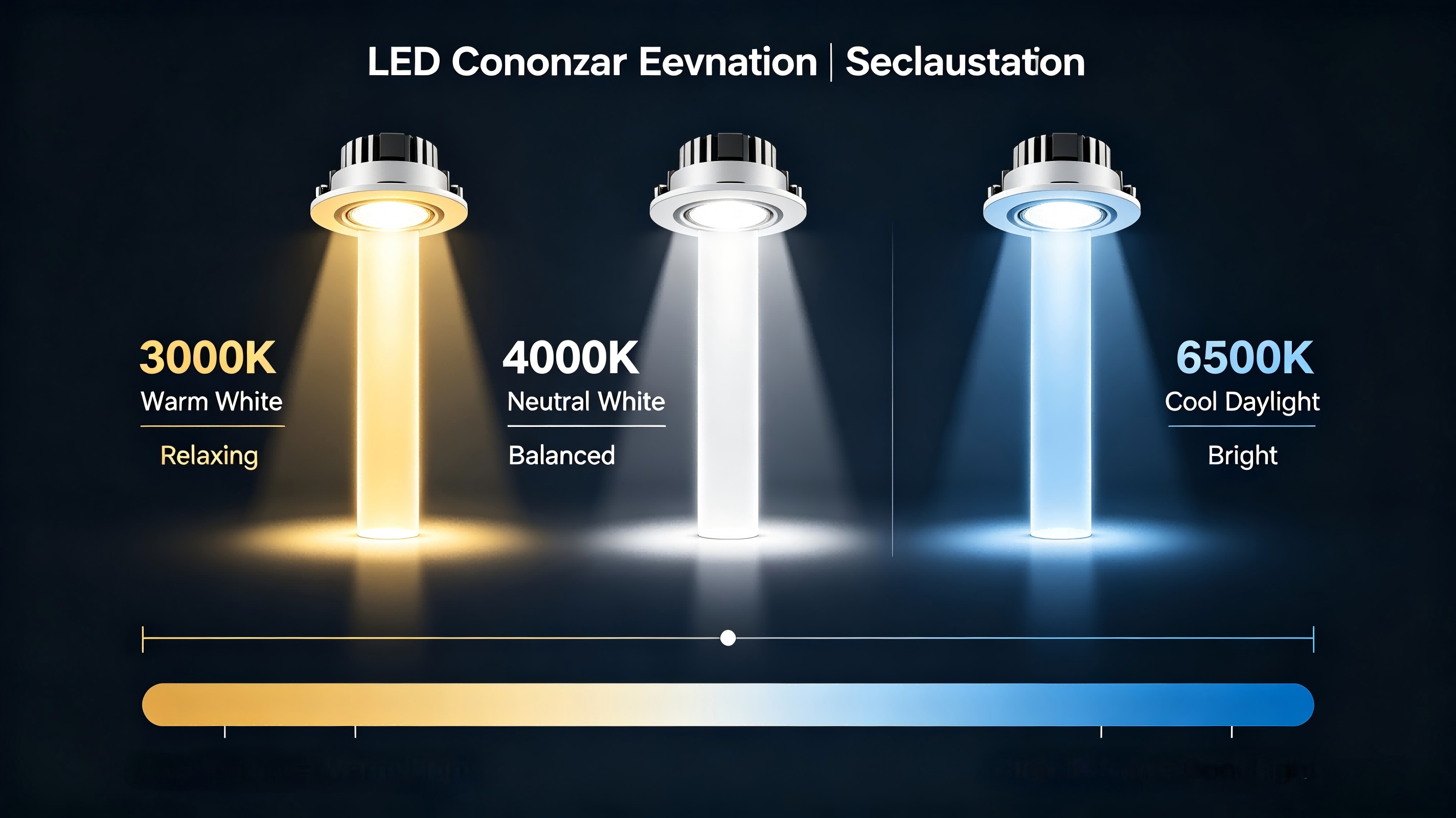
- Lower Kelvin value = warmer, yellowish light
- Higher Kelvin value = cooler, bluish white light
Matching Picture 1: Black Body Color Temperature Gradient Chart
Layout suggestion: Full-width horizontal gradient image, marked 1000K~10000K with color blocks + text labels.
3. Common Standard CCT Ranges & Features
3.1 Warm White: 2700K – 3000K
- Light tone: Soft golden yellow light
- Visual feeling: Cozy, relaxing, warm atmosphere
- Application: Bedroom, living room, hotel guest rooms, restaurants, villa interior, home corridor
- Advantage: Reduces eye strain at night, creates comfortable resting vibe
Matching Picture 2: Bedroom lit by 3000K LED linear light, warm atmosphere rendering
3.2 Warm Neutral White: 3500K
- Light tone: Mild yellow-white, balance of warm and clean
- Application: Apartment living room, clothing shops, small offices, beauty salons
Matching Picture 3: Clothing retail store with 3500K panel lights
3.3 Neutral White / Pure White: 4000K – 4500K
- Light tone: Natural white without obvious yellow or blue tint, close to daylight at noon
- Application: Office, meeting room, supermarket, kitchen, hospital, classroom, factory workshop
- Advantage: True color reproduction, high concentration for long-time work
Matching Picture 4: Modern office ceiling LED panel lights 4000K
3.4 Cool White / Daylight: 5000K – 6500K
- Light tone: Bright cool white with slight blue tint, high brightness sense
- Application: Warehouse, factory workshop, parking lot, supermarket fresh area, stadium, outdoor street light, plant grow light
- Advantage: High visibility, sharp details, suitable for high-precision work
Matching Picture 5: Factory workshop 6000K high bay LED lights
3.5 Ultra Cool Daylight: 7000K–10000K
Rare for general lighting, mainly used for special plant cultivation, aquarium lighting, industrial inspection.
Matching Picture 6: One comparison collage (side-by-side 3000K / 4000K / 6000K same space contrast)
Best blog image: Same room shot three times with different CCT, obvious color difference for readers to compare directly.
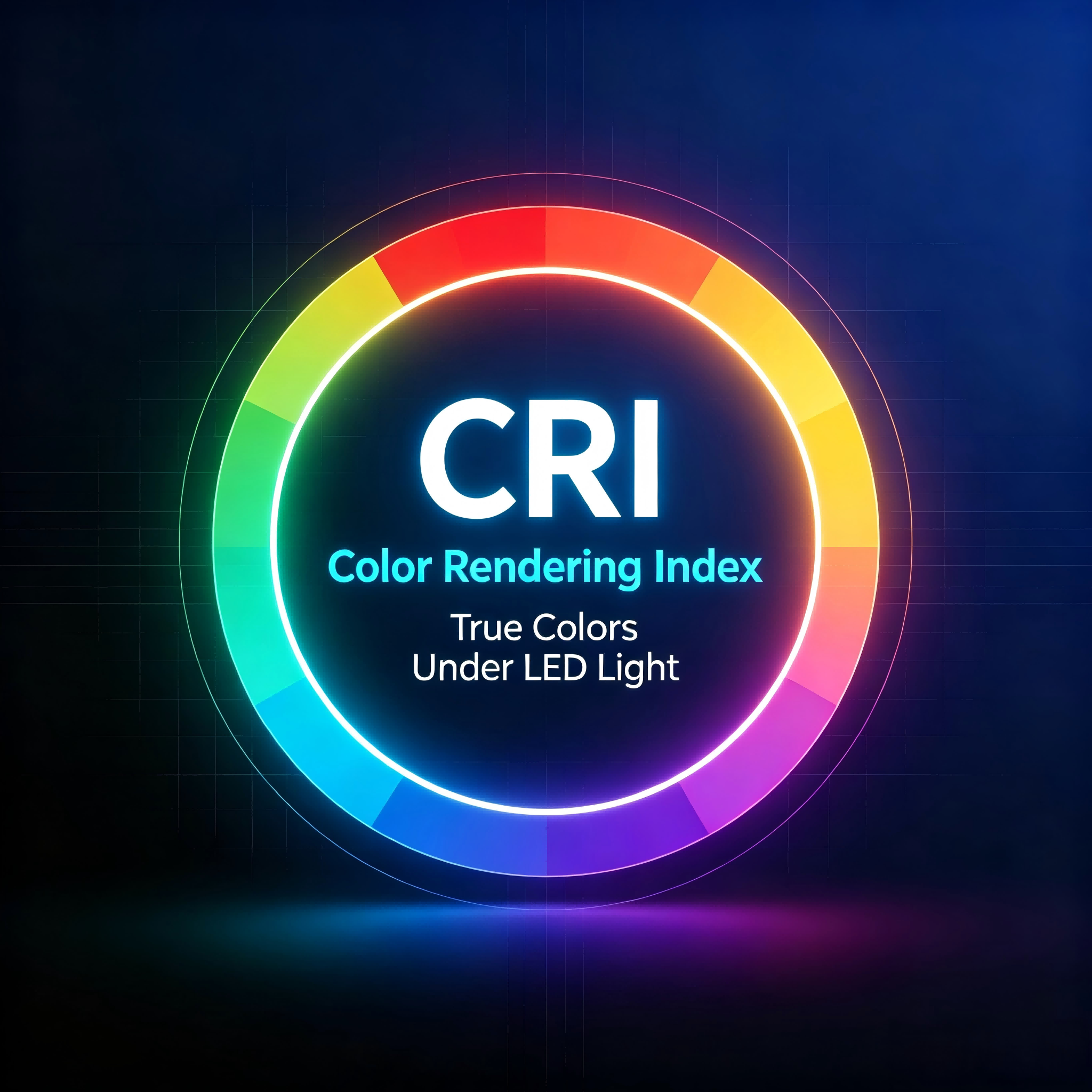
4. CCT vs CRI – Don’t Mix Them Up (Important Blog Knowledge Point)
Many customers mix CCT and CRI together, they are totally different parameters:
- CCT: Controls the color tone (yellow or blue white)
- CRI (Color Rendering Index): Controls how accurately light restores the real color of objects Example: Two 4000K LED lights can have CRI80 and CRI90 separately. Same white tone, but CRI90 shows fabric, food and skin colors more vividly.
Matching Picture 7: Simple two-column comparison infographic of CCT & CRI definition
5. Tunable CCT LED Lights (Hot-Selling Product Introduction)
Now most indoor LED panels, linear lights and downlights support tunable CCT (3CCT: 3000K/4000K/6000K switchable via wall switch or remote control). Benefits for users:
- One lamp meets multiple scene demands
- Save inventory cost for distributors
- Flexible for home renovation, commercial project adjustment
Matching Picture 8: Tunable CCT LED panel light + remote control display
6. How to Choose the Right CCT For Your Project (Blog Practical Guide)
- Home bedroom/lounge: 2700K–3000K
- Kitchen / Bathroom / Living room: 3500K–4000K
- Office / Classroom / Shop: 4000K–4500K
- Factory / Warehouse / Outdoor parking: 5000K–6500K
- Hotel lobby / Restaurant: 3000K–3500K
7. Conclusion
CCT is the core factor to decide lighting atmosphere and usage experience. Before purchasing LED lights, confirm your usage scene first to pick the suitable Kelvin value. Tunable CCT LED products are becoming mainstream for global residential and commercial lighting, bringing more flexible lighting solutions for end users.
Understanding CRI in LED Lighting – Color Rendering Index Guide
Gaggione Introduces HADAR: A Modular Optics Platform for Architectural Lighting